In the world of electronics, the bidirectional trigger diode (BTD), also known as a diac, is a well – known component. It’s typically associated with alternating current (AC) circuits, especially in applications like phase – control circuits for light dimmers and motor speed controllers. But a question that often arises is: Can a bidirectional trigger diode be used in DC circuits? As a supplier of bidirectional trigger diodes, I’m here to delve into this topic and provide you with a comprehensive analysis. Bidirectional Trigger Diode
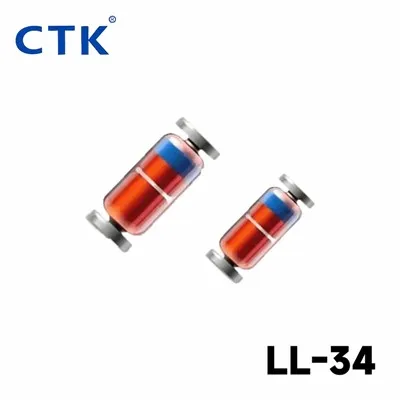
Understanding the Bidirectional Trigger Diode
Before we discuss its application in DC circuits, let’s first understand what a bidirectional trigger diode is. A BTD is a two – terminal semiconductor device that conducts current in both directions when the applied voltage reaches a certain breakover voltage. It has a symmetric characteristic, which means that its electrical behavior is the same regardless of the polarity of the applied voltage.
The operation of a BTD is based on the principle of avalanche breakdown. When the voltage across the BTD reaches the breakover voltage, the device switches from a high – impedance state to a low – impedance state, allowing current to flow through it. Once the current drops below a certain holding current, the BTD returns to its high – impedance state.
Typical Applications in AC Circuits
In AC circuits, bidirectional trigger diodes are widely used in phase – control circuits. For example, in a light dimmer, the BTD is used to control the firing angle of a thyristor or a triac. The AC voltage is applied across the circuit, and when the voltage reaches the breakover voltage of the BTD, it triggers the thyristor or triac to conduct, allowing current to flow through the load (such as a light bulb). By adjusting the breakover voltage, the firing angle can be changed, which in turn controls the amount of power delivered to the load.
Another common application is in motor speed controllers. Similar to the light dimmer, the BTD is used to trigger a power semiconductor device to control the power supplied to the motor, thus adjusting its speed.
Challenges of Using BTD in DC Circuits
At first glance, using a BTD in a DC circuit might seem straightforward. However, there are several challenges that need to be considered.
Unidirectional Nature of DC
The most obvious challenge is the unidirectional nature of DC. Since a BTD is designed to conduct current in both directions, in a DC circuit, the device will only experience one polarity of voltage. Once the DC voltage reaches the breakover voltage, the BTD will switch to its low – impedance state. But unlike in an AC circuit, where the voltage alternates and the current can drop below the holding current during the zero – crossing, in a DC circuit, the current may not drop below the holding current on its own. This means that the BTD may remain in the low – impedance state continuously, which can lead to overheating and damage to the device.
Lack of Automatic Reset
In AC circuits, the zero – crossing of the voltage provides a natural opportunity for the BTD to reset to its high – impedance state when the current drops below the holding current. In a DC circuit, there is no such zero – crossing, so an additional mechanism is required to reset the BTD. This adds complexity to the circuit design.
Possible Solutions for Using BTD in DC Circuits
Although there are challenges, it is still possible to use a bidirectional trigger diode in DC circuits with the right approach.
Adding a Reset Circuit
One solution is to add a reset circuit to the DC circuit. This circuit can be designed to reduce the current through the BTD below the holding current at a specific time, allowing the BTD to return to its high – impedance state. For example, a capacitor – based circuit can be used. When the BTD conducts, the capacitor charges. Once the capacitor reaches a certain voltage, it can be used to trigger a switch that reduces the current through the BTD.
Pulse – Type DC Applications
In some cases, where the DC voltage is in the form of pulses, the BTD can be used more effectively. If the pulse width is short enough and the interval between pulses is long enough, the current through the BTD can drop below the holding current during the intervals, allowing the BTD to reset. This is similar to the operation in an AC circuit, where the voltage alternates.
Specific Applications in DC Circuits
There are some specific DC applications where a bidirectional trigger diode can be useful.
Over – Voltage Protection
In a DC power supply circuit, a BTD can be used for over – voltage protection. When the DC voltage exceeds the breakover voltage of the BTD, it conducts and triggers a protection circuit, such as a crowbar circuit, to divert the excess current and protect the load.
Pulse Generation
In some pulse – generation circuits, a BTD can be used to generate pulses. By applying a DC voltage across the BTD and using a charging circuit to gradually increase the voltage across the BTD, when the voltage reaches the breakover voltage, the BTD conducts and generates a pulse.
Advantages of Using BTD in DC Circuits
Despite the challenges, there are some advantages to using a bidirectional trigger diode in DC circuits.
Cost – Effectiveness
BTDs are relatively inexpensive components. Using a BTD in a DC circuit can be a cost – effective solution compared to using more complex and expensive semiconductor devices.
Simplicity
In some cases, the use of a BTD can simplify the circuit design. For example, in an over – voltage protection circuit, using a BTD can reduce the number of components required compared to other protection methods.
Conclusion
In conclusion, while a bidirectional trigger diode is typically associated with AC circuits, it can be used in DC circuits with proper design and consideration of the challenges. By adding a reset circuit or using pulse – type DC, the BTD can be effectively utilized in DC applications such as over – voltage protection and pulse generation.
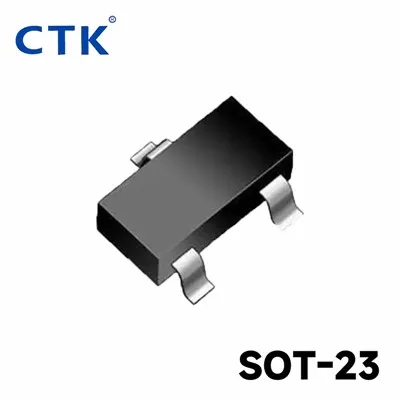
As a supplier of bidirectional trigger diodes, we understand the unique requirements of different circuits and applications. Our BTDs are of high quality, with precise breakover voltages and reliable performance. Whether you are designing an AC or DC circuit, we can provide you with the right components to meet your needs.
Transistor If you are interested in purchasing bidirectional trigger diodes for your DC or AC circuit applications, we invite you to contact us for further discussion. Our team of experts is ready to assist you in selecting the most suitable products and providing technical support.
References
- Horowitz, P., & Hill, W. (1989). The Art of Electronics. Cambridge University Press.
- Malvino, A. P., & Bates, D. J. (1993). Electronic Principles. McGraw – Hill.
Tongke Electronic Co., Ltd
Tongke Electronic Co., Ltd. is one of the most experienced bidirectional trigger diode manufacturers and suppliers in China, featured by quality products and low price. Please rest assured to wholesale advanced bidirectional trigger diode made in China here from our factory. Contact us for pricelist.
Address: No.3,Chayuan Rd, Street 3, AilingKan, Dalingshan, Dongguan, Guangdong, China.
E-mail: jack@ctk-elec.com
WebSite: https://www.ctkchip.com/
