As a provider of vertical machining centers, I often encounter inquiries from clients about the maximum spindle speed of these machines. This aspect is crucial as it directly impacts the efficiency, precision, and the range of materials and operations that a vertical machining center can handle. In this blog, I’ll delve into the factors determining the maximum spindle speed, typical ranges, and the importance of appropriate speed selection. Vertical Machining Center

Factors Affecting the Maximum Spindle Speed
Spindle Design and Construction
The design of the spindle is the primary determinant of its maximum speed. Modern vertical machining center spindles are engineered with high – precision bearings. For example, ceramic hybrid bearings are increasingly popular. Ceramics, such as silicon nitride, have lower thermal expansion coefficients compared to steel. This property allows the bearings to maintain their shape and accuracy even at high rotational speeds, reducing the risk of overheating and premature wear.
The spindle motor is also vital. High – speed spindles typically use high – frequency or direct – drive motors. Direct – drive motors eliminate the need for belts or gears, which can introduce mechanical losses and vibrations. By directly coupling the motor to the spindle, power transmission is more efficient, enabling the spindle to reach higher speeds.
Lubrication and Cooling
Effective lubrication is essential for high – speed spindle operation. At high speeds, friction between the moving parts of the spindle can generate a significant amount of heat. Oil – air lubrication systems are commonly used in high – speed spindles. In these systems, a fine mist of oil is mixed with compressed air and delivered to the bearings. This not only reduces friction but also helps in dissipating heat.
Cooling systems, such as water – cooled jackets around the spindle housing, are often incorporated. These jackets circulate coolant to absorb the heat generated during operation, ensuring that the spindle temperature remains within an acceptable range. Maintaining a stable temperature is critical as thermal expansion can cause dimensional changes in the spindle, leading to reduced accuracy and potential damage.
Machine Structure and Rigidity
The overall structure of the vertical machining center plays a role in determining the maximum spindle speed. A rigid machine frame can better withstand the dynamic forces generated by the high – speed rotation of the spindle. If the machine is not rigid enough, vibrations can occur, which not only affect the machining accuracy but also limit the maximum achievable spindle speed.
For instance, heavy – duty cast iron frames are commonly used in high – end vertical machining centers. The mass and stiffness of the cast iron absorb the vibrations and provide a stable platform for the spindle, allowing it to operate at higher speeds without excessive deflection.
Cutting Tools and Workpiece Materials
The type of cutting tools and the workpiece materials also influence the maximum spindle speed. Different cutting tools have different speed limitations. For example, high – speed steel (HSS) tools generally have lower maximum speed capabilities compared to carbide tools. Carbide tools can withstand higher cutting forces and temperatures, allowing for higher spindle speeds.
Workpiece materials also have a significant impact. Soft materials like aluminum can often be machined at much higher spindle speeds than hard materials such as stainless steel or titanium. Machining hard materials at excessively high speeds can lead to rapid tool wear and poor surface finish.
Typical Ranges of Maximum Spindle Speed
The maximum spindle speed of a typical vertical machining center can vary widely depending on its intended application.
Low – to Medium – End Machines
For low – to medium – end vertical machining centers, which are often used for general – purpose machining and small – to medium – sized parts, the maximum spindle speed typically ranges from 6,000 to 12,000 revolutions per minute (RPM). These machines are suitable for a variety of materials, including plastics, aluminum, and some mild steels. They are commonly found in small – scale job shops and educational institutions where cost – effectiveness and versatility are important.
High – End and Specialized Machines
High – end vertical machining centers designed for precision machining of complex parts, such as aerospace components or medical devices, can have maximum spindle speeds ranging from 12,000 to over 30,000 RPM. Some ultra – high – speed machining centers can even reach speeds of up to 60,000 RPM or more. These machines are equipped with advanced spindle technologies, such as high – frequency direct – drive motors and state – of – the – art cooling and lubrication systems.
Importance of Appropriate Spindle Speed Selection
Machining Efficiency
Selecting the right spindle speed is crucial for achieving optimal machining efficiency. A higher spindle speed generally allows for faster cutting, reducing the machining time per part. For example, when machining a large number of aluminum parts, using a high – speed spindle can significantly increase the production rate. However, it’s important to note that increasing the spindle speed too much can lead to shorter tool life and increased tool – changing frequency, which can offset the gains in machining time.
Surface Finish
The spindle speed also has a direct impact on the surface finish of the machined part. At appropriate speeds, the cutting tool can remove material smoothly, resulting in a fine surface finish. If the spindle speed is too low, the surface may have visible tool marks and a rough texture. Conversely, if the speed is too high, the cutting tool may generate excessive heat, causing the material to melt or chip, also resulting in a poor surface finish.
Tool Life
Proper spindle speed selection is essential for maximizing tool life. Using a spindle speed that is too high for a particular tool and workpiece material can cause rapid wear of the cutting edges. This not only increases the cost of tool replacement but also affects the machining accuracy as a worn – out tool may produce parts that are out of tolerance. By choosing the correct spindle speed, the cutting forces and temperatures can be kept within the tool’s recommended operating range, extending its useful life.
Serving Your Machining Needs
At [Our Company], we understand the importance of the maximum spindle speed in vertical machining centers. We offer a wide range of vertical machining centers with different maximum spindle speeds to meet the diverse needs of our clients. Whether you are a small job shop looking for a cost – effective machine for general – purpose machining or a large – scale manufacturer in need of a high – precision, high – speed machine for complex parts, we have the right solution for you.
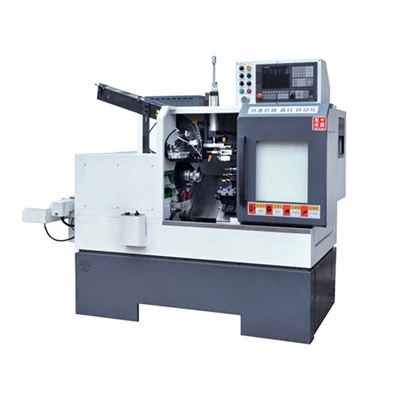
Our team of experts can assist you in selecting the most suitable vertical machining center based on your specific requirements, including the type of materials you work with, the desired surface finish, and your production volume. We also provide comprehensive after – sales support, including maintenance, training, and technical assistance.
5 Axis Machining Center If you are interested in learning more about our vertical machining centers or would like to discuss your machining needs, please feel free to contact us. We look forward to working with you to enhance your machining capabilities.
References
- "Machining Technology: An Introduction" by John A. Schey.
- "Modern Machining Technology" by Peter N. Stevens.
- Industry whitepapers on vertical machining center technology from leading manufacturing associations.
Taizhou Qiyang Trading Co., Ltd.
As one of the most professional vertical machining center manufacturers and suppliers in China, we’re featured by quality products and good price. Please rest assured to buy bulk vertical machining center for sale here and get quotation from our factory. Customized orders are welcome.
Address: Zhenhai Village, Binhai Town, Wenling City, Taizhou City, Zhejiang Province
E-mail: qycncmachine@outlook.com
WebSite: https://www.qycncmachine.com/
