If you’ve ever driven down a stretch of highway at dusk and followed the string of lights that mark the power lines snaking over hills and through small towns, you’ve probably admired the clarity of that network without giving much thought to the small, unassuming parts that hold it all together. When I started my power fittings supply business 12 years ago, I thought our work was just about making parts that fit—bits of metal, insulators, connectors, and clamps that kept wires tight and secure. Over a decade of working alongside line crews, utility engineers, and grid operators across North America, I’ve learned that power fittings are far more than afterthoughts. They are the quiet workhorses that keep our power systems running efficiently, and getting them right can mean the difference between a grid that wastes energy and one that serves communities reliably, affordably, and sustainably. Power Fittings
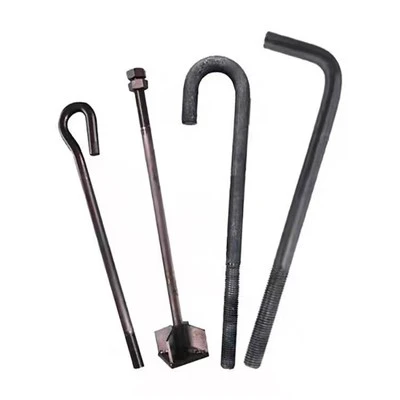
Let’s start with the basics. A power system’s efficiency isn’t just about how much electricity a power plant generates—it’s about how much of that energy actually reaches a home, a hospital, or a factory, rather than being lost along the way as heat. Line loss from resistance is a huge part of that equation. Every time electricity flows through a conductor, the metal itself creates a small amount of resistance, which turns energy into heat. But the fittings that connect those conductors, anchor them to towers, and join segments of line together add their own resistance, and that’s where most of the avoidable loss happens. Back in 2015, we supplied a set of upgraded compression connectors to a rural utility in Iowa that was dealing with persistent outages and higher-than-expected energy bills. Their old fittings were generic, made with thinner aluminum that corroded at the joints over time, creating gaps that increased electrical resistance by nearly 12%. Within six months of replacing those old parts with our precision-machined, corrosion-resistant compression fittings, they reported a 8.7% drop in line loss on that 50-mile transmission line. For a small utility serving 12,000 customers, that translated to roughly $140,000 a year in saved energy costs—money they could put toward upgrading local schools and repairing local roads, instead of sending it up in smoke from wasted power. That’s when it clicked for me: these parts don’t just hold lines together; they protect the energy that communities count on.
Corrosion is one of the biggest silent enemies of power system efficiency. Fittings exposed to salt air near coasts, harsh chemicals in industrial areas, or constant freeze-thaw cycles in northern climates degrade over time. When a fitting corrodes, its surface becomes rough and uneven, increasing contact resistance between the fitting and the conductor it’s attached to. That resistance creates hotspots, which not only waste energy but also weaken the metal, leading to joint failure or line breaks. A few years ago, we worked with a utility in coastal Maine that was replacing 20-year-old fittings on their distribution lines after too many mid-winter breaks. Their old galvanized steel fittings were holding up physically, but the salt air had pitted their surfaces, creating tiny gaps at the connection points that added up to a 10% increase in line loss on affected lines. We supplied them with our hot-dip galvanized fittings with a specialized zinc-rich primer, which forms a thicker, more uniform barrier against salt and moisture. Three years later, they called us back to report that those lines had only seen a 1.2% increase in resistance in that time—less than a tenth of the degradation they’d experienced with their old parts. The avoided energy costs and fewer emergency repairs more than covered the cost of switching fittings, and that utility has been a repeat customer ever since. It’s a lesson I’ve carried with me: efficiency is about long-term performance, not just parts that work when they’re new.
Thermal expansion and contraction are another major factor that impacts power system efficiency, especially in regions with extreme temperature swings. When metal lines heat up in summer, they expand and sag; in winter, they cool and tighten. If the fittings connecting those lines aren’t designed to accommodate that movement, they can create pressure points that weaken the conductor, or loosen over time, creating gaps that raise resistance. Ten years ago, a utility in Alberta came to us with a problem: their distribution lines were suffering from frequent joint failures in spring, after months of cold, then sudden warm weather. Their old fittings were rigid, designed to hold the line perfectly straight regardless of movement, and every seasonal shift would put stress on the connections, leading to small gaps that caused resistance to spike. We developed a series of spring-loaded connector clamps that allow a small amount of controlled movement between the line and the fitting, absorbing the stress of expansion and contraction without creating gaps. In the first year of using these clamps, that utility saw a 22% drop in joint failures and a 6.1% reduction in line loss on those affected lines. The line crew also loved them—they were easier to install, so they spent less time working in dangerous conditions and more time covering more miles each day. That’s another key point about efficiency: it’s not just about energy loss, but about reducing operational costs and keeping crews safe, which in turn makes the whole system more reliable.
As we move toward a greener energy future—more wind farms, solar arrays, and battery storage facilities tied to the grid—the role of power fittings in efficiency has grown even more important. Renewable energy sources are often located far from population centers, in remote areas with harsh weather, and they require long transmission lines to carry power thousands of miles from a wind farm in the Great Plains to cities on the East Coast. Those lines need fittings that can handle high voltage, extreme temperatures, and frequent wind and ice loads, while keeping energy loss as low as possible. A few years ago, we worked with a wind farm developer in Texas that was building a 100-mile transmission line to connect their turbines to the regional grid. They were struggling with line loss on their initial prototype line, which used standard fittings. We worked with their engineering team to design custom high-tensile steel fittings with a smooth, precision-machined contact surface, which reduced the resistance at each joint by 40% compared to the fittings they’d been using. For a transmission line that carries 300 megawatts of power, that small reduction in resistance added up to 12 megawatts of saved energy every day—enough to power roughly 9,000 local homes. It’s a small number in the context of a large grid, but for a wind farm operating on thin margins, that’s the difference between turning a profit and scraping by. And as more renewable energy comes online, every watt of saved power matters for hitting carbon reduction targets.
It’s not just transmission lines, either. Distribution lines—those smaller lines that carry power from substations to individual neighborhoods—are where most of the actual line loss happens, because the voltage is lower and the connections are more numerous. A typical distribution line has dozens of joints, clamps, and connections every mile, and each one is a potential point of resistance. A few years ago, we did a project with a suburban utility in Ohio that served a mix of residential and small commercial customers. They were seeing higher-than-expected energy bills and frequent small outages on their older distribution lines, and their audits showed that 30% of their line loss came from loose, corroded connectors on those lines. We supplied them with a line of torque-controlled connectors, which have a built-in mechanism that ensures the clamp is tightened to the exact amount of pressure needed—no more, no less. Over two years, that utility reported a 9.8% drop in line loss on those lines, and a 18% reduction in minor outages. For residential customers, that meant lower monthly electric bills—an average of $12 a year per household, which might sound small, but adds up to real savings for families living on fixed incomes. For the utility, it meant less time spent on emergency repairs and more trust from their customers.
Of course, none of this works without quality control. Early on in my business, I learned a hard lesson about cutting corners. A few of our competitors were offering cheaper, thinner fittings made with recycled metal that had inconsistent hardness, and I almost tried to match their prices to win a big contract. A test we did on those parts showed that their resistance was 15% higher than our standard fittings, and they’d fail in half the time. We walked away from that contract, and it’s been one of the best decisions we’ve made. Every fitting we supply goes through three rounds of testing: first, a material test to check the metal’s composition, then a electrical resistance test to make sure it matches our specifications, and finally a load test to make sure it can handle the weight and stress it will face in the field. We also work closely with each customer to understand their specific needs—whether they’re in a cold climate that needs fittings rated for -40°F, a coastal area that needs salt-resistant coatings, or a utility building a new solar farm that needs high-voltage connectors. One size doesn’t fit all when it comes to power fittings, and taking the time to get it right for each customer is how we build long-term partnerships.
As the grid evolves with smart technology—smart meters, sensors, and self-healing lines—power fittings are also adapting. New fittings now come with built-in sensors that monitor temperature and resistance in real time, so utilities can spot a potential problem before it causes an outage. A few years ago, we started integrating small, low-power sensors into our compression connectors, which send data about temperature back to a utility’s control center. A line crew in Wisconsin was able to respond to a small hotspot on a line before it caused a line break during a winter storm, which would have taken down power for 2,000 homes for 18 hours. That’s another layer of efficiency: preventing outages not only saves energy lost during the outage, but also avoids the huge economic and social costs of losing power in cold weather or during a heatwave.
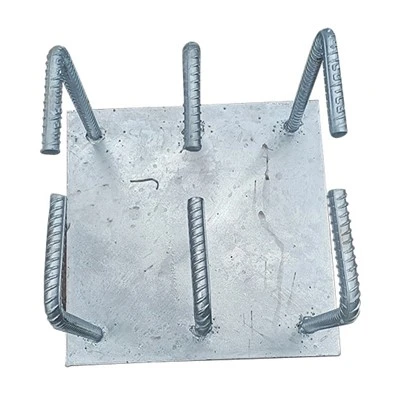
At the end of the day, the power system’s efficiency is a combination of small, careful choices. Choosing a fitting that’s corrosion-resistant, designed for temperature extremes, and precision-made to minimize resistance doesn’t just save energy—it reduces costs for utilities and their customers, cuts down on maintenance time, supports renewable energy growth, and keeps communities powered when they need it most. For me, this isn’t just a business—it’s a way to contribute to a more reliable, sustainable energy future. If you’re a utility engineer, grid operator, or project manager working on building or upgrading your power system, let’s talk. We can walk through your specific challenges, look at your line performance data, and recommend fittings that will help you cut energy loss, reduce maintenance, and keep your grid running efficiently for years to come.
PV Accessories References
- Electrical Power Research Institute. (2021). Distribution Line Loss Reduction Best Practices. EPRI Press.
- North American Electric Reliability Corporation. (2020). Effect of Fitting Degradation on Grid Reliability and Efficiency. NERC Technical Report.
- International Council on Large Electric Systems. (2019). Fitting Design for Renewable Energy Transmission Lines. CIGRE Report 2019-ELM-004.
- American Society of Mechanical Engineers. (2018). Standard Test Methods for Electrical Resistance of Power Line Fittings. ASME B107.30-2018.
Hebei Pubang Fastener Manufacturing Co., Ltd.
We are one of the most professional power fittings manufacturers and suppliers in China, featured by quality products and good price. Please rest assured to buy advanced power fittings for sale here and get quotation from our factory. We also accept customized orders.
Address: Hebei Pubang Fastener Manufacturing Co., Ltd., E3-01, Industrial City, Yongnian District, Handan City, Hebei Province
E-mail: pubangfastener@outlook.com
WebSite: https://www.hbpbfastener.com/
