Hey there! I’m a supplier of Guide & Wear Rings, and I’ve been in this business for quite a while. Over the years, I’ve seen how these little rings perform under all sorts of pressures, and let me tell you, it’s a wild ride. So, I thought I’d share some insights on how guide and wear rings perform in different pressures. Guide & Wear Rings
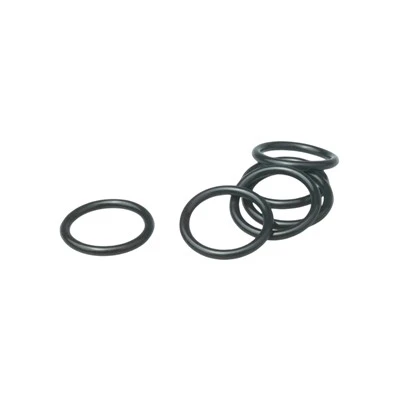
First off, let’s talk about what guide and wear rings are. Guide rings, as the name suggests, are designed to guide moving parts in a machine. They help keep things aligned and prevent excessive wear and tear. Wear rings, on the other hand, are there to protect the components from abrasion and friction. They’re like the bodyguards of your machinery, taking the hits so that the important parts stay safe.
Low – Pressure Situations
In low – pressure environments, guide and wear rings have it pretty easy. The forces acting on them are relatively small. For guide rings, the alignment task becomes less challenging. They don’t have to work as hard to keep the moving parts in place. The low pressure means there’s less stress on the ring material, so the risk of deformation is minimal.
Wear rings in low – pressure scenarios also have a longer lifespan. The reduced friction and abrasion mean that they don’t wear out as quickly. We often use materials like PTFE (Polytetrafluoroethylene) or nylon in these situations. These materials are known for their low coefficient of friction, which is ideal when the pressure is low. PTFE, in particular, is super slippery, so it helps the moving parts glide smoothly without creating much heat or wear.
I remember one client who had a small – scale conveyor system in their workshop. The guides and wear rings we supplied for the conveyor rollers were under very low pressure. After a year of operation, when they did a maintenance check, the rings were hardly worn at all. The low – pressure environment allowed the rings to do their job without getting overly stressed.
Medium – Pressure Situations
Medium – pressure situations are where things start to get a bit more interesting. Guide rings in these conditions need to be a bit more robust. The forces trying to misalign the moving parts are stronger, so the guide rings need to have enough stiffness to resist these forces. We usually look for materials with good mechanical properties, like filled PTFE or polyoxymethylene (POM).
Filled PTFE has additives that improve its strength and wear resistance. The additives can be things like glass fiber or carbon fiber. These fillers give the PTFE some extra oomph, making it better able to handle medium – level pressures. POM is also a great choice. It’s a tough plastic with good dimensional stability, which is crucial for keeping the alignment accurate.
Wear rings in medium – pressure situations face more intense friction and abrasion. The material needs to be able to withstand this without breaking down. We might use materials like polyurethane in addition to filled polymers. Polyurethane is elastic and has good abrasion resistance. It can absorb some of the shock and energy generated by the moving parts, reducing the impact on the components it’s protecting.
A few months ago, we had a customer who was using our guide and wear rings in a hydraulic cylinder. The pressure in the cylinder was at a medium level. We recommended a combination of filled PTFE guide rings and polyurethane wear rings. After a few months of operation, the customer reported that the rings were performing great. There was no sign of excessive wear, and the cylinder was working smoothly.
High – Pressure Situations
High – pressure environments are the real test for guide and wear rings. Guide rings here need to be extremely strong and rigid. The forces they’re up against can be massive, and any misalignment can lead to serious problems. We often turn to materials like bronze or metal – filled polymers.
Bronze is a classic choice for high – pressure applications. It has excellent load – bearing capacity and can handle high temperatures. Metal – filled polymers, like those with copper or bronze fillers, combine the advantages of polymers and metals. They have the low friction of polymers and the strength of metals.
Wear rings in high – pressure situations are in for a rough ride. The amount of friction and abrasion is through the roof. We use materials like sintered metal or ceramic – coated polymers. Sintered metal wear rings can take a beating. They’re dense and hard, capable of withstanding high – pressure and high – temperature conditions. Ceramic – coated polymers offer a unique combination of low friction and high hardness. The ceramic coating provides a tough outer layer that resists wear, while the polymer base gives some flexibility.
I once supplied guide and wear rings for a high – pressure pumping system in an oil refinery. The pressure in the pumps was extremely high. We used bronze guide rings and sintered metal wear rings. The customer was a bit skeptical at first, but after a few months of operation, they were really impressed. The rings were holding up well, and there were no issues with the pump’s performance.
Factors Affecting Performance
It’s not just the pressure that affects how guide and wear rings perform. There are other factors too. For example, the speed of the moving parts plays a big role. If the parts are moving really fast, the wear and tear on the rings increase. The temperature of the environment is also important. High temperatures can soften some materials, reducing their strength and wear resistance.
The type of fluid in contact with the rings can also have an impact. Some fluids are corrosive, and they can damage the ring material over time. That’s why it’s crucial to choose the right material based on all these factors, not just the pressure.
Why Choose Our Guide & Wear Rings
As a supplier, we’ve got a wide range of guide and wear rings to suit different pressures and applications. We take the time to understand our customers’ needs. Whether it’s a low – pressure situation in a small – scale operation or a high – pressure heavy – duty industrial application, we can provide the right solution.

Our rings are made from high – quality materials, and we follow strict manufacturing processes to ensure their performance. We’ve got a team of experts who can offer advice on which rings are best for your specific situation. And we’re always available to answer any questions you might have.
Guide & Wear Rings If you’re in the market for guide and wear rings, or if you’re not sure which ones are right for your application, don’t hesitate to reach out. We’re more than happy to have a chat with you about your needs and work together to find the perfect solution. Whether it’s about understanding how the rings will perform under different pressures or any other concerns, we’re here to help. Just get in touch, and we can start a conversation about getting the best guide and wear rings for your business.
References
- "Engineering Materials and Their Applications" by Lawrence Mefford, seventh edition.
- "Plastics in Engineering Design: Properties, Processes, and Applications" by Moshe Narkis.
Hebei Jinwo Machinery Technology Co., Ltd.
Hebei Jinwo Machinery Technology Co., Ltd. is one of the most professional guide & wear rings manufacturers and suppliers in China, featured by quality products and good price. Welcome to buy bulk advanced guide & wear rings in stock here and get pricelist from our factory. We also accept customized orders.
Address: Room 2109, Tower A, Meidong International, No.16 Guang’an Avenue, Chang’an District, Shijiazhuang City, Hebei Province, China
E-mail: info@jinwoseal.com
WebSite: https://www.jinwoseal.com/
