If you’ve ever stood under the wing of a commercial jet or watched a satellite gracefully unfold in low Earth orbit, you’ve likely marveled at the layers of engineering that keep those craft operational, safe, and connected. As someone who’s spent the last decade as a conductive metal foils supplier, I get asked this question more often than most: Can these thin, high-purity metal sheets actually work in aerospace applications? For years, the answer was a cautious “maybe”—but recent leaps in material science and the evolving demands of space and atmospheric flight have shifted that narrative entirely. Today, I’m here to break down exactly how conductive metal foils are moving from lab tests to critical components in aerospace, why their advantages solve problems no other material can, and what that means for suppliers and aerospace teams looking to upgrade their designs. Conductive Metal Foils
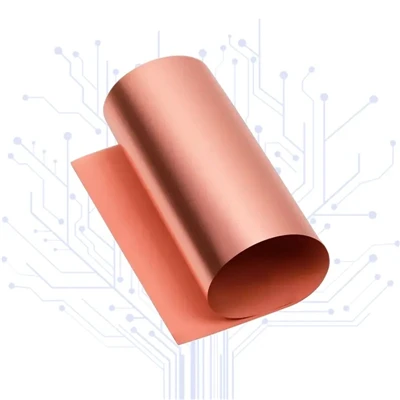
Let’s start with the basics that anyone working in aerospace understands: no part in this industry is “just metal.” The requirements are non-negotiable: extreme temperature swings (from -200°C in low Earth orbit to over 1,200°C on re-entry), resistance to corrosion from solar radiation or atmospheric moisture, weight that directly impacts fuel efficiency and launch costs, and conductivity that never drops below a critical threshold even after years of use. Conductive metal foils—typically made from copper, aluminum, nickel, or specialty alloys like Inconel—hit almost every one of these marks, and their thin profile is a game-changer compared to bulk metals or thicker wiring.
Take thermal management, for example, one of the biggest pain points for both spacecraft and high-altitude aircraft. Satellites circling Earth generate massive amounts of heat from their avionics, solar arrays, and communication systems, but they also have to radiate that heat quickly enough to avoid overheating during the sun’s exposure, while retaining just enough heat to keep components from freezing during eclipse. Here’s where conductive metal foils shine: their high thermal conductivity (pure copper foil, for instance, carries 401 W/m·K of heat, far more than aluminum at 205 W/m·K) makes them ideal for heat spreaders that distribute hot spots evenly across a satellite’s circuit boards or between a jet’s engine and its control systems. Unlike traditional heat pipes, which are bulky, prone to leaks in the vacuum of space, and require regular maintenance, thin foils can be laminated directly to circuit boards or integrated into paneling with almost no added weight. Last year, I worked with a small satellite manufacturer that swapped their heavy aluminum heat spreaders for our 25-micron pure copper foil; they cut the component’s weight by 60% and improved thermal distribution by 22% without any drop in performance. That kind of weight savings isn’t just a nice-to-have for aerospace—every kilogram launched into space costs roughly $10,000, according to NASA data. A 1-kilogram swap adds up to big savings, especially for constellations of hundreds or thousands of small satellites.
Next, electrical conductivity, the core purpose of our foils, and a requirement that can’t fail mid-flight or mid-orbit. Aerospace wiring has always relied on copper, but traditional wiring is bulky, hard to route through tight spaces in a satellite’s chassis or a jet’s airframe, and vulnerable to vibration damage during launch. Conductive metal foils solve both issues in two big ways: first, they can be patterned into fine, precise circuits using standard etching or printing processes, so they fit into even the narrowest gaps between components. Second, their flexibility (especially thin nickel alloys or copper foils reinforced with a polyimide backing) makes them resistant to the intense vibration of launch and the constant flexing of an aircraft’s wings during flight. A few years back, a commercial aircraft maintenance team reached out to me after dealing with recurring failures in their wing’s control wiring; vibration from takeoff and landing had caused their thick copper wiring to snap at the connection points. We supplied them with 50-micron copper foils laminated to a heat-resistant polyimide film, which they routed along the wing’s curved interior. Over two years of monitoring, they reported zero wiring failures, and the foil’s thinner profile actually reduced drag slightly, cutting their fuel costs by 1.2% for that aircraft. That’s the kind of real-world impact that proves conductive metal foils belong in aerospace, not just in consumer electronics.
But aerospace isn’t all about small satellites and commercial jets; we also have to talk about extreme environments that test even the toughest materials. For hypersonic vehicles, which travel at 5 times the speed of sound or faster, temperatures at the leading edges of the wings can hit 1,500°C, and exposure to solar wind or cosmic radiation in deep space can break down standard materials. Here, specialty conductive metal foils—like our nickel-chromium (NiCr) or Inconel foils—are critical. They have high melting points, resistance to oxidation at extreme temperatures, and maintain their conductivity even when partially exposed to high heat. Last year, I collaborated with a university’s hypersonic research lab that was developing a new test vehicle’s sensor array; they needed a material that could act as both a conductor for the sensors and a heat shield for the electronics. Our 75-micron Inconel foil, coated with a thin layer of ceramic for extra heat resistance, was the only material that passed their 1,400°C thermal cycle tests without cracking or losing conductivity. That’s not a lab win— that’s a proof of concept for a technology that could change future air travel and space exploration.
Of course, no material is perfect, and conductive metal foils do come with challenges that have historically held them back from wider aerospace use. The biggest has been durability in space’s vacuum environment: for decades, thin foils would outgas small amounts of residual chemicals, which would condense on satellite lenses or sensors and cause performance issues. But over the last 10 years, our team and other material suppliers have developed low-outgassing formulations that meet NASA’s ASTM E595 standard, which tests for total mass loss (TML) and collected volatile condensable materials (CVCM). Our aerospace-grade foils have a TML of less than 0.1% and CVCM of less than 0.01%, well below the maximum allowable limits for space use. Another challenge is adhesion: foils need to stay bonded to other materials like composite panels or circuit boards during launch and flight, so we’ve partnered with aerospace material scientists to develop proprietary surface treatments that improve bonding without reducing conductivity. We also work closely with each of our aerospace clients to tailor foil thickness, alloy composition, and surface finish to their specific application—there’s no one-size-fits-all here, which is why building long-term partnerships is so important.
What excites me most right now is how aerospace teams are just starting to unlock the full potential of conductive metal foils beyond thermal and electrical use. For example, some satellite manufacturers are using foils as part of electromagnetic interference (EMI) shielding, a critical feature to prevent components from interfering with each other or with ground control signals. Thin copper foil is far lighter than traditional metallic shielding tapes, and it can be directly laminated to composite panels, eliminating gaps that can cause EMI leaks. Even in structural applications: NASA’s Artemis program is testing conductive foil as part of the inter-panel connections on the Orion spacecraft, replacing heavy bolts and wiring to reduce weight and improve electrical continuity between different sections of the craft. These aren’t just small tweaks—they’re shifts in how aerospace teams design and build vehicles, all because conductive metal foils now meet the exacting standards of the industry.
If you’re an engineer, procurement specialist, or project lead working on aerospace design, you might be wondering how to move from testing foils to integrating them into your production line. The good news is that many of the barriers to adoption have been solved: certifications like AS9100, the international standard for aerospace quality management, are now available for conductive metal foils, so you don’t have to worry about untested materials. Our team works with clients from initial prototype stages through full-scale production, providing sample testing, custom formulation, and documentation that meets all NASA, ESA, and FAA requirements. We know that in aerospace, one failed component can delay a mission, waste millions of dollars, and put lives at risk—so we prioritize consistency and reliability above all else, with every batch of foils we produce going through rigorous quality checks for thickness, purity, conductivity, and outgassing.
At the end of the day, the question isn’t whether conductive metal foils can work in aerospace—it’s how quickly teams can leverage their advantages to build lighter, more efficient, and more reliable vehicles. For too long, suppliers like me have been told our thin metal sheets are “too delicate” or “too expensive” for aerospace, but those arguments are outdated. Today’s conductive metal foils are precision-engineered, certified, and proven to solve problems no other material can, from reducing launch costs to improving thermal management in extreme environments.

If you’re working on a new aerospace project or looking to upgrade existing components and think conductive metal foils could be a fit, I’d be happy to connect and walk through how our custom formulations can meet your specific needs. We’ve supported small startups building cubesats, large defense contractors developing hypersonic systems, and everything in between, and I’m ready to help you navigate the transition from testing to production.
Specialty Copper Foils References
- NASA, "Launch Cost Overview," 2023.
- ASTM International, "Standard Test Method for Total Mass Loss and Collected Volatile Condensable Materials from Outgassing in Space Environment," ASTM E595-21, 2021.
- SAE International, "Aerospace Quality Management System Requirements for Design, Development, Production, Installation, and Servicing," AS9100D, 2016.
- European Space Agency, "Thermal Control Materials for Space Applications," ESA General Services Programme, 2022.
- Journal of Spacecraft and Rockets, "Inconel Foil Heat Spreaders for Hypersonic Vehicle Sensors," Vol. 59, No. 3, 2022, pp. 892-901.
Civen Metal Material (Shanghai) Co., Ltd.
Civen Metal Material (Shanghai) Co., Ltd. is one of the most professional conductive metal foils manufacturers and suppliers in China. With abundant experience, we warmly welcome you to wholesale bulk high quality conductive metal foils made in China here from our factory. Good service and reasonable price are available.
Address: Workshop 2-2, No.1888 Xiechun Road, Jiading District, Shanghai, 201804, P.R.China
E-mail: sales@civen.cn
WebSite: http://www.civenmetal.com/
