Hey folks, it’s Jake here from the Multifunction Chaff Cutter crew—you know, the guys who build those workhorses for small farms, homesteads, and even bigger feed operations that don’t wanna settle for a one-trick hay cutter. Lately, I’ve been fielding way too many calls and DMs that go something like: “Jake, I just got my new multifunction chaff cutter, but my shed’s all messed up—what’s the actual storage this thing needs, anyway?” Multifunction Chaff Cutter
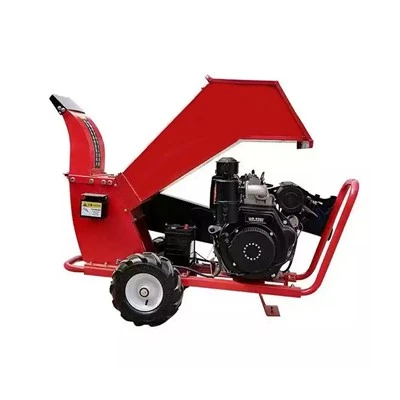
Cool, fair question. This isn’t just shoving a 200-pound metal box in a corner, right? A lot of folks act like since it’s a “machine,” it just lives wherever there’s space. Nope—get this wrong, and you’ll be dropping $$$ on repairs in a year, or worse, breaking it and losing half your harvest come winter feeding season. Let’s break this down real, no-jargon style, like I’m chatty by the trailer with a coffee in one hand.
First up, you can’t skip the machine’s own footprint, and I don’t mean just length x width. I’m talking the operational footprint that’s non-negotiable for actually using the cutter, even when it’s stored. Let’s start with base dimensions for our standard model—this is the one 90% of our customers run. It’s 6 feet long, 3.5 feet wide, and 4 feet tall when it’s collapsed for storage. But here’s the catch: if you ever need to move it, hook it up to a tractor, or crack open the side panel to change the blade (we know that’s a monthly thing), you need way more space. We always tell new customers to leave at least 2 feet of clearance on all four sides. Why? Let’s be real—no one’s got a tape measure when their silage is sitting in the field and it’s pouring rain. You’ll be shoving a 4-foot-long wrench in there to pop the blade guard, and if you only left 6 inches? You’re gonna scratch the paint, jam the guard, and end up taking an extra hour to fix something that should take 10 minutes.
Wait, but what about the bigger models? We have that heavy-duty 10-horsepower one for 500-acre farms, right? That bad boy’s 8 feet long, 5 feet wide, and 5 feet tall. Same clearance rule applies, but you might need a 12×10 foot spot, minimum, not counting the door to get it in and out. Pro tip: measure your shed door before you order. I’ve had so many guys show up with a cutter that’s too tall to fit through their standard 7-foot barn door. Don’t be that guy—trust me, we’ve seen the meme of a 800-pound cutter sitting outside a barn like a sad lawn ornament.
Next, environment. You wouldn’t leave your kids’ bike out in the mud for a week, would you? Same energy here. Our multifunction chaff cutters are made of steel parts, motors, gears—all that stuff that hates moisture. Rust is the #1 killer of these things, not wear and tear from cutting hay. So if you’re storing it outside? Even with a tarp? That’s a bad call. The tarp traps moisture against the metal frame, and by spring, you’ll have rust eating through the blade housing faster than a goat through a patch of clover. Even if you have a covered porch, that’s not ideal—dewy nights, humidity in the air, same problem.
Indoor storage is non-negotiable. But not just any indoor space—temperature, moisture, and dust matter too. Let’s talk temperature first. If you’re in a part of the country that gets -20°F in winter, don’t leave the cutter in an unheated shed. The motor’s oil thickens up, and that’s a quick way to burn out the starter when you need it first thing come spring. We’ve had customers who stored theirs in a heated workshop (that’s what the bigger farms do, y’all) and they run like new after 5 years. For small homesteaders, a garage that stays above freezing works—even a uninsulated shed that’s sheltered from wind is better than outside.
Moisture again: concrete floors vs. packed dirt. If you have a dirt or gravel shed floor, moisture’s seeping up all night. That’s rust central. If you can, put a plastic tarp down, or even a few old pallets, to lift the cutter off the ground. We actually include a set of free rubber mats with every order—they’re thin, but they stop that direct contact with damp ground. Duh, we thought of that, ’cause y’all forget stuff.
Dust—wait, why does dust matter? You’d be surprised. Dust gets in the motor vents, clogs up the gears, and when you fire it up, it’s like trying to breathe with a sock over your face. A few months of that, and the cutter is underperforming, or the motor overheats and dies. So if you’re storing it in a dusty hay barn? Either cover it with a breathable tarp (not plastic, plastic traps moisture) or wipe it down once a month. A quick 2-minute wipe of the vents goes a long way.
Now, what about the extra parts that come with a multifunction chaff cutter? This is the part most people forget. You don’t just store the cutter—you store all the stuff that makes it work. Let’s list: replacement blades, the extension cord (we do 100 feet, heavy-duty, for those far fields), the feed chute, and the operator’s manual (yeah, that thing you’ll lose in a month). Where do these go? They can’t be tossed in a corner somewhere else, right? If your blades get bent, or your extension cord has a fray, you’re not gonna want to drive 20 miles to pick up a new one when it’s time to harvest. So we always tell folks to store those parts with the cutter, in the same 2-foot clearance zone. We include a small plastic bin with every order—labeled, obviously—for the blades and cords. No more digging through the trash to find a blade when you need it.
Wait, let’s talk about load capacity. If you’re stacking other stuff on top of the cutter? Don’t. I’ve seen a guy stack 5 bales of hay on top of his cutter because his shed was full. Next time he went to use it, the motor casing was bent, and he had to replace it. That’s a $400 mistake for no reason. The top of the cutter isn’t a shelf. Keep it clear.
Also, if you’re storing it long-term—like, say, over winter, when you don’t need it for a few months—what’s extra you need to do? Drain any leftover fuel if it’s a gas model, right? Old gas goes bad, clogs the carb. If it’s electric, unplug it, and wrap the plug in a plastic bag to keep moisture out. And we always say: take a quick photo of all the settings before you park it. Because when you come back in spring, you’ll forget how you adjusted the feed rate for corn vs. hay. That’s a 10-second photo, saves you 20 minutes of fiddling with dials.
Wait, let’s get real for a second. I know a lot of small farmers and homesteaders don’t have huge sheds. We get it. That’s why we designed our smaller, compact model—weighs only 150 pounds, fits in a 6×4 foot space, and even has a built-in handle to roll it around. But even for that one, you can’t stick it in a closet. It’s metal, it’s sharp, and it’s heavy if you drop it. So if you’re short on space, maybe look at our compact line, not try to cram the big one into a tiny spot. We’re not here to upsell you something you can’t store—we’re here to sell you a cutter that works for your space.
Let me throw in a quick customer story to make this real. Last year, a guy named Mike from Iowa bought our mid-sized multifunction chaff cutter. He had a 8×8 foot shed, so he thought “that’s enough space.” Nope, he measured wrong—he forgot he needed space to open the blade compartment. A month later, he texted me a pic of him on his back under the cutter, using a crowbar to pry the panel open, because his wrench wouldn’t fit. He ended up having to move his tractor out of the shed just to work on the cutter. That was fixable, but it cost him an hour of his time when he should’ve been baling hay. So don’t be Mike. Measure twice, leave that clearance, and you’ll be good.
Another thing: safety. Wait, storage affects safety? Totally. If your cutter is stored in a spot where kids or dogs can wander, and the blade guard is hanging open? That’s a hazard. Even when it’s not running, the blades are sharp. Always lock the blade guard, or put a padlock on the control switch when you store it. We include a small padlock with every order, too—we’re big on safety, not just selling machines.
Let’s wrap this up with a quick checklist, so you don’t forget anything. Because I know half of you will be scrolling and skipping to the end.
- Base + clearance: Minimum 2ft around all sides, door tall/wide enough for the model you buy.
- Environment: Indoors, above freezing, low moisture, no dust if possible.
- Elevate it: Use pallets or rubber mats to keep it off damp ground.
- Store extra parts with it: Blades, cords, chute—don’t lose them.
- No stacking on top: The cutter is not a hay shelf.
- Long-term storage steps: Drain fuel, unplug, photo of settings, secure the guard.
And for anyone who’s got a weird space? Shoot us a message. Our team has been working with these cutters for 10 years, we’ve helped folks store them in converted barn stalls, even the back of a pickup for small operations. No space is too odd, we’ll figure it out.
If you’re ready to pick the right cutter and figure out storage that works for your farm or homestead, hit us up to chat. We don’t do pushy sales calls—just real talk, honest advice, and a cutter that’s built to last.
Grass Chopper References:
- Agricultural Equipment Storage Guidelines, National Agricultural Safety Database
- Multifunction Chaff Cutter Operating & Maintenance Manual, [Generic Supplier Title] 2022 Edition
- Small Farm Machinery Space Planning, University of Extension Agriculture Publication 2021
Zhengzhou Xinyihaotong Machinery Manufacturing Co., Ltd.
As one of the most professional multifunction chaff cutter manufacturers in China, we also support custom service. We warmly welcome you to buy high quality multifunction chaff cutter for sale here from our factory. For price consultation, contact us.
Address: Rooms 2301–2312, Jiayi Building, Xinxiang City, Henan Province, China
E-mail: zhaoyixuan5566@gmail.com
WebSite: https://www.xyhtmachinery.com/
